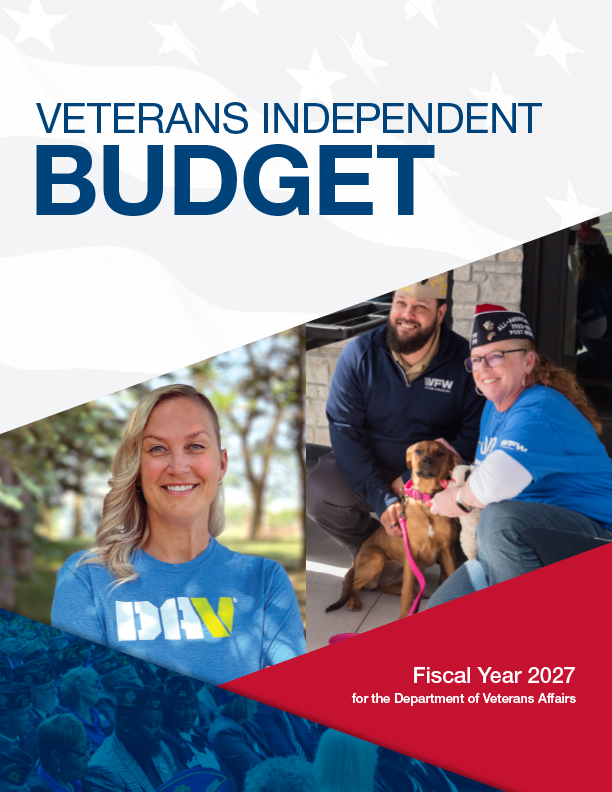
 For nearly 40 years, DAV and the Veterans of Foreign Wars (VFW) have partnered to provide a clear assessment of the financial resources the Department of Veterans Affairs needs to serve those who served. The Veterans Independent Budget for fiscal year (FY) 2027 arrives at a critical juncture, as the VA faces rising demand for care and benefits following years of budgetary unpredictability.
Unlike proposals from Congress or the administration, these recommendations are based solely on the documented needs of veterans and their families, caregivers and survivors.
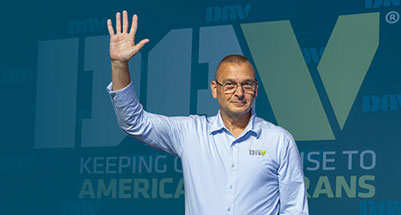
“The Veterans Independent Budget is our opportunity to put a human face on the issues that determine the future of veterans health care and benefits,” said DAV Washington Headquarters Executive Director Jim Marszalek. “We are dedicated to making tangible differences in the lives of America’s veterans and their families by ensuring the VA has the right resources to meet their evolving needs.”
Addressing the capacity gap
The budget recommends $223.3 billion for FY 2027 to address the full range of services and benefits veterans have earned. This funding aims to address a backlog of health care needs that were delayed or unavailable in previous years.
While enrollment is rising, the number of unique veteran users and their reliance on the VA continues to grow even faster, driven by PACT Act expansions and an aging veteran population.
The VA currently lacks the capacity to meet this demand due to decades of underinvestment in infrastructure, technology and staffing. To remedy this, the organizations call for:
- $116.4 billion for Medical Services to expand direct care and fill approximately 40,000 clinical vacancies
- $15.8 billion for Medical Facilities to address a massive backlog of unfunded maintenance projects
- $1.45 billion for Medical and Prosthetic Research to maintain the VA’s leadership in medical innovation
Critical program expansions
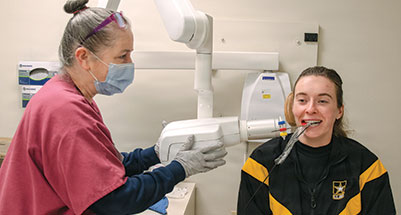
The document highlights several targeted investments necessary to modernize the veteran experience, including $2.5 billion for long-term services and supports for aging veterans and $675 million for comprehensive dental care for all disabled veterans. It also recommends $100 million for women veterans health care to support a population that now exceeds 1 million enrollees.
Protecting veterans benefits
The Veterans Benefits Administration (VBA) remains under significant pressure from more than 1 million PACT Act-related claims. The budget recommends $6.2 billion for VBA to sustain recent progress and continue reducing the claims backlog. Notably, the report calls for $7 million to help the VA’s Office of General Counsel combat “claims sharks”—unaccredited agents who illegally charge veterans for assistance.
Looking toward 2027, DAV remains committed to ensuring the VA continues to be the primary provider and coordinator of care for our nation’s heroes. It’s imperative that Congress and the administration move beyond short-term fixes and begin making the long-term investments our veterans have earned.
“With a united, engaged voice, we will continue to protect veterans benefits and fight to ensure the promise is kept,” said DAV National Legislative Director Jon Retzer. “Now is the time for every veteran to speak up and demand that Congress fully fund these critical priorities to secure the care our community has earned.”
The Veterans Independent Budget is available at https://www.dav.org/about-dav/legislation/veterans-independent-budget/.
Related News & Events

A morning walk, a Purple Heart, a debt paid