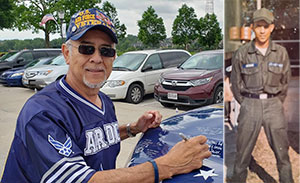
For years, Javier Guzman had no reason to question his health.
While stationed at Richards-Gebaur Air Force Base in Missouri, Guzman drove vehicles on the flight line, near aircraft and while transporting officers. Like other airmen, he ate the food, drank the water and did his job without hesitation.
He was also unknowingly being exposed to toxic chemicals.
“No one knew that anything was potentially contaminated,” Guzman said.
He was surprised when, decades after service, he was diagnosed with prostate cancer, a condition the Department of Veterans Affairs attributed to his time at Richards-Gebaur, which officially closed in 1994.
“I didn’t have any symptoms,” he said. “All of a sudden, it popped up.”
His protein levels, used to screen for prostate cancer, were dangerously high. Doctors confirmed the diagnosis, and Guzman had surgery to remove part of his prostate, beginning a long, uncertain journey.
The VA initially recognized the connection between his service and illness. Guzman received a disability rating, which acknowledged that the cancer was tied to where he served.
However, that recognition wasn’t permanent.
During a routine VA reevaluation—standard for cancer ratings—the department confirmed Guzman still had prostate cancer. Then, unexpectedly, the VA concluded his condition was not linked to his exposure at Richards-Gebaur.
That notification meant his benefits were at risk.
“At my age, 73, it would have changed everything,” Guzman said. “I would’ve had to cut down a lot of things.”
Guzman sought help from DAV, where he connected with Michael Franko, a senior national service officer in St. Louis.
Franko immediately saw problems.
“The blatant disregard for positive medical evidence—that was the first red flag,” he said.
Guzman was confused. The VA had approved his claim based on medical evidence linking his cancer to toxic exposure but now argued the opposite using the same record.
Franko began a deeper investigation, and what he found was even more concerning.
The VA examiner focused narrowly on particulate matter related to perfluoroalkyl and polyfluoroalkyl substances (PFAS)—so-called “forever chemicals”—ignoring the broader environmental reality at the base.
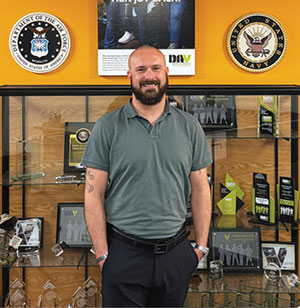
“That’s when I really started getting into the weeds,” Franko said, dissecting the medical opinion.
Richard-Gabaur had long been identified as heavily contaminated. Environmental Protection Agency (EPA) reports documented a wide range of toxic chemicals in the groundwater and soil, far beyond a single exposure source.
That understanding hadn’t yet influenced VA decision-making. Instead of arguing over one chemical or one exposure, Franko reframed the case around the “totality of exposure.”
“This isn’t a case where you can point to just one thing,” he said. “It’s everything combined.”
He combed through EPA reports, identifying contaminants such as vinyl chloride, trichloroethylene (TCE) and perchloroethylene (PCE)—chemicals known to persist on the base and impact human health.
Armed with new findings, he challenged the VA’s process directly.
Franko argued that the original medical opinion was inadequate because it failed to consider all exposures together, something required under VA guidelines for toxic-exposure risk activity cases.
After Franko detailed and presented the facts, his analysis succeeded. The VA agreed to obtain a new medical opinion rather than proceed with the reduction of benefits.
The conclusion this time was more favorable to Guzman. When viewed collectively, the chemical exposures Guzman experienced on base pointed to his cancer.
Not long after, Franko picked up the phone to break the good news. Guzman heard the words he’d been waiting for: His benefits would remain intact.
“I was really excited,” said Guzman. “It helped me tremendously.”
After months of uncertainty, the outcome brought financial, emotional and medical stability and restored a needed sense of balance.
“It was like the weight was lifted off,” he said.
DAV’s report Ending the Wait for Toxic-Exposed Veterans notes that inconsistent processes and a weak legal framework continue to impact veterans. Franko’s experience highlights that when a veteran’s exposure or medical history isn’t fully and properly evaluated, the consequences can be life-altering.
Cases like Guzman’s are more common than many veterans realize, Franko said. Routine future exams can trigger reevaluations, and without updated medical evidence or strong advocacy, veterans can lose benefits they have rightfully earned.
“Veterans have to stay on top of their medical evidence,” he said.
Equally important is having knowledgeable advocacy to challenge the system when it errs. For Guzman, that advocacy was pivotal.
What once felt like it could unravel his life instead became a moment of relief—and a testament to the transformative power of effective advocacy when facing the VA system.
Related News & Events

Thousands helped, more welcome

The modern covenant

A morning walk, a Purple Heart, a debt paid