

On a March evening in 2025, DAV life member and Army veteran Jeff Slotnick began to hiccup. His hiccups intensified to the point where he couldn’t breathe, and by 11 p.m., his wife, Nancy, had to rush him to the medical center on Joint Base Lewis-McChord.
After stabilizing him and reviewing his X-rays and CT scan, the doctor found the cause of his hiccups: a 9-centimeter tumor on Slotnick’s liver pressing on his diaphragm.
Things moved rapidly from there. Results of a biopsy came back positive for liver cancer. But that wasn’t the worst part.
Slotnick had Stage 4 cholangiocarcinoma, or bile duct cancer.
“The prognosis presently is incurable but treatable,” he explained. “That means if I survive, I will probably need to have chemotherapy for the rest of my life.”
As a Gulf War veteran with 21 years of service, Slotnick has care that’s covered through the Department of Veterans Affairs under the PACT Act, a landmark law signed in 2022. The PACT Act expanded VA health care and benefits for veterans exposed to toxic hazards or materials.
But Slotnick’s case underscores a troubling gap. He visited his VA primary care doctor for annual screenings and labs, yet his cancer wasn’t detected until it had already progressed to Stage 4.
“It has since been determined that my cancer was most likely caused by toxins that I was exposed to in the military,” Slotnick said. “I wasn’t thinking about it in my 20s.”
Slotnick’s case isn’t singular. Gulf War and post-9/11 veterans were exposed to burn pits, oil fires, pesticides and other toxins. While the PACT Act ensures coverage once a presumptive condition is diagnosed, veterans aren’t routinely screened for these diseases.
By the time cancers like cholangiocarcinoma are discovered, surgery is often no longer an option. Even when surgery is possible (for localized, non-metastasized cases), it often doesn’t completely remove the cancer. Once the disease reaches Stage 4, the cancer has spread into other organs, and treatment focuses on slowing progression, not curing it.
In early 2024, Slotnick’s annual blood work from the VA showed high cholesterol, diabetes and liver issues. Later that year, persistent abdominal aches drove him to see a civilian specialist. Even with an ultrasound, the tumor on his liver went undetected. His doctors attributed symptoms to lifestyle. In reality, cancer was advancing.
Now, between chemotherapy treatments at the Fred Hutchinson Cancer Center in Seattle, Slotnick’s new mission is to advocate for earlier detection through regular screenings for presumptively exposed veterans and ensuring the VA, Department of Defense and civilian providers can seamlessly share medical records so no clues are missed.
“Veterans shouldn’t fall through the cracks because one system can’t see what another already knows,” said Jon Retzer, deputy national legislative director at DAV. “Full electronic health record integration and interoperability between the VA, DOD and community providers isn’t just about modern health IT—it’s about ensuring safety; supporting seamless care coordination; and delivering comprehensive, quality health care.
“When every provider has the full picture, veterans get faster diagnoses, better treatment options, and the care they deserve and earned.”
Despite the grueling treatments, Slotnick remains positive.
“Combat service prepared me for what I’m going through now,” he said. “I have to walk through live fire to get to the other side.”
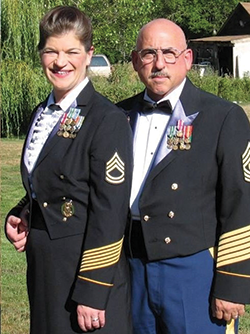
His wife, Nancy, who is also a veteran, has been with him through the treatments and long nights.
“I couldn’t do this without her,” Slotnick said.
He refers to his new routine as his “battle rhythm,” finding strength in moments with family, practicing gratitude and finding hope that his advocacy can spare others.
“When I wake up in the morning, I look outside, I see the trees, I see the birds. I’m more aware of the good things that I have. I’m more aware of the little moments,” Slotnick said. “I can’t change my diagnosis, but I can make sure other veterans don’t get theirs too late. That’s my mission now.”
Slotnick’s story is a sobering reminder that while the PACT Act has expanded access to care for toxic-exposed veterans, early detection remains the missing piece. DAV and MOAA’s Ending the Wait for Toxic-Exposed Veterans report (endingthewait.org) calls for systemic improvements in how the VA identifies, screens and cares for veterans with toxic-exposure-related conditions.
For veterans who served in areas where they may have been exposed, the message is clear: Don’t wait, advocate. Talk to your provider about screenings, and visit benefitsquestions.org for help filing a claim.
WHAT VETERANS SHOULD KNOW
- Know your risks: Burn pits, oil fires, pesticides or other environmental exposures correlate with higher risks of certain cancers and respiratory illnesses.
- Don’t wait for symptoms: Request annual blood screenings to catch early cancer indicators—and don’t take no for an answer.
- Share your history: Make sure every doctor you see (VA, military or civilian) knows your service history and potential exposures.
- Get support: Accredited service officers with DAV can help you understand your benefits, file claims and access the care you’ve earned. Learn more at benefitsquestions.org.
Related News & Events

Veterans benefits increase 2.8% to keep pace with inflation
Community Impact Day: What happens next is up to you


Be a voice for veterans

Critical policy goals lay the roadmap for advocacy