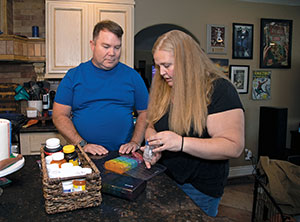
No matter what, Kevin Milano makes sure fresh flowers are always on the kitchen counter for his wife, Cynthia.
“He is the sweetest, funniest guy,” she said. “And he’s the best husband. He really and truly is.”
The flowers are a daily reminder and a glimpse into the heart of the man she met 19 years ago at his family’s hardware store in Stockton, California.
She came into the store looking for parts for her car. He had recently gotten out of the Army and was working the register.
Cynthia got her car parts. Kevin got her number.
They started dating in early 2007, and the relationship quickly became more serious. Both had been married before and were raising children from those relationships, but everyone was excited to build a new life together.
Cynthia remembers the first time her son met Kevin’s two boys. They formed an instant bond as Kevin’s oldest grabbed the other two and pulled them in close, saying, “We’re family now; you’re not going anywhere.”
The couple got engaged later that year, welcomed their daughter in 2008 and were married in 2010. Their three-bedroom ranch was bursting, and they were happy.
Then about 10 years ago, Cynthia noticed that Kevin was becoming more forgetful than usual.
“He’s always had little things—I would call them ‘little blips’—that would get lost in translation,” Cynthia said. “I always thought that was just his personality.
“But one day he left 17 cups of coffee throughout the house. Then he was calling the kids the wrong names.”
Concerned, she took him to a doctor. An MRI revealed a lesion on the brain.
In the Army, Kevin had experienced two traumatic brain injuries (TBIs).
One came from a falling pipe and another during a field training exercise. He was at Fort Irwin, California, participating in oppositional force training for a unit preparing to deploy. In a simulated riot, he stepped out of a shipping container, rolled his ankle, hit his head on the back of the container and was knocked unconscious.
Years later, Kevin’s battle buddy told Cynthia what had happened. The unit had to continue with the simulation, so no one knows how long he was unconscious. This was on the second day of a two-week exercise, and leadership didn’t pull him from the field. Instead, he continued the exercise wearing an air cast and using a cane made from a two-by-four.
The doctor told Cynthia that the brain lesion could have come from those head injuries and that TBIs earlier in life can be masked by the brain’s plasticity, but as one ages, more symptoms can appear.
Kevin’s symptoms rapidly got worse. Additionally, his doctors discovered a vitamin B12 deficiency, Parkinsonism and ataxia—conditions that can affect his balance, movement, speech and memory.
He began wandering away from the house, forgetting to take his medications and falling. And at times, either because of surgeries to repair problems stemming from his ankle injury or his neurological issues, he had to rely on a wheelchair to get around. Cynthia took on the role as his caregiver.
“When he first got sick and couldn’t take care of himself, that was hard because our life abruptly changed,” Cynthia said. “I didn’t have a partner; I had somebody that I had to take care of.”
But instead of feeling hopeless, the Milanos faced the change head-on.
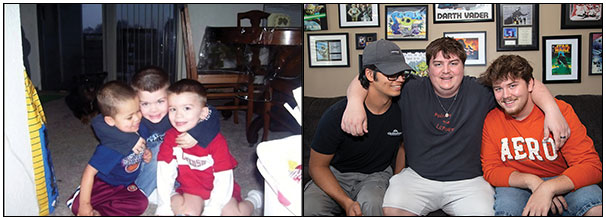
“I am the ultimate positivity person,” Cynthia said. “And we figured it out. We attack each day. I don’t want him to ever feel like it’s a burden—and I don’t feel like it’s a burden. We’re family. That’s what you do.”
Not knowing who to go to for caregiving guidance at the time, Cynthia took it upon herself to adapt their home and life to Kevin’s needs. She installed grab bars in their bathroom, lowered the bed for transfers and installed cameras to monitor his movements. She prepares his lunches, sets alarms to remind him to take his medications and creates checklists to keep him engaged throughout the day.
The children eagerly pitch in to help.
“I always say I’m one of the lucky ones, because I have four kids who will drop anything at any time to come and help,” Cynthia said. “We divide and conquer everything. That’s been our motto since these guys were little: It’s all hands on deck. So no matter what’s in front of us, we all work together.”
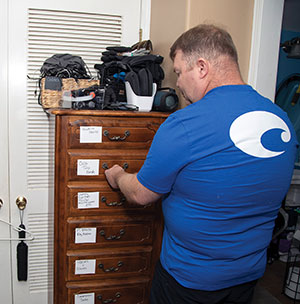
Some days are better than others, and Cynthia knows what kind of day it’s going to be by how Kevin answers five questions when he wakes up:
What’s your name?
What are we doing today?
What did we have for dinner last night?
What’s your mood today?
“And now the new one is, ‘How many spoons do you think you have for the day?’” Cynthia said.
Kevin’s occupational therapist recommended the question, using the metaphor from the 2003 essay “The Spoon Theory” by Christine Miserandino. It allows Kevin to describe how much energy he has for the day, with each activity “costing” a certain number of spoons.
The questions allow Cynthia to gauge his memory, energy and mood and whether he may be prone to wandering.
“Our days change by how he is,” she said.
Through the challenges there have been bright spots, too. As his children grew, Kevin’s fun-loving personality made him popular with their friends. The Milano house was the place to hang out. He coached their water polo and soccer teams. Former players still send him pictures and updates of how they’re doing.
“He had so much fun with these kids. And he made an impact on them because of the way he coached and his personality,” Cynthia said. “We’re so lucky we have Kev, because he’s definitely the glue.”
As a caregiver, Cynthia has navigated this journey largely alone. Even though Kevin requires 24/7 care, he doesn’t qualify for the Department of Veterans Affairs Caregiver Program. Her schedule—from showering to grocery shopping to work—revolves around Kevin’s need for constant supervision.
But recently she found some relief.
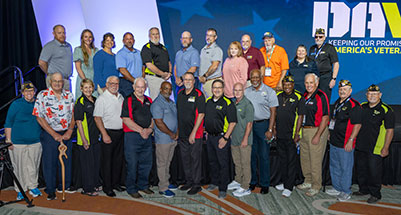
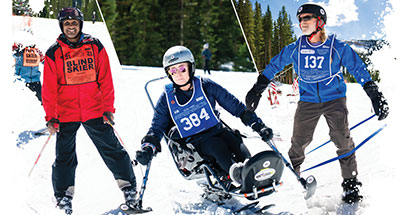
One of Kevin’s VA doctors suggested recreational therapy as part of his care. So earlier this year, Cynthia took him to the National Disabled Veterans Winter Sports Clinic, which is co-presented by the VA and DAV every year.
“Going to the winter sports clinic was the most time I’ve ever gotten to myself in probably 18 years,” Cynthia said.
While he skied and participated in the clinic’s other adaptive sports, she, along with more than a dozen other caregivers, gathered for workshops put on by DAV.
The clinic’s caregiver program, established in late 2024, seeks to empower caregivers with evidence-based programs and resources, including DAV Caregivers Support, a no-cost service that gives caregivers of veterans and veterans who are caregivers personalized care plans and one-on-one support from trained specialists.
“We never want someone who is caring for a loved one to feel isolated or at a loss of where they can turn for help,” said Ron Minter, who directs DAV Caregiver Support. “We’ve designed all aspects of our program to be lifelines for caregivers and something they can look to, to know they are seen and valued for the role they play.”
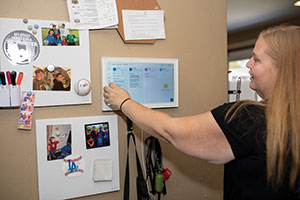
For Cynthia, those workshops allowed her to share her experiences and learn from others in a supportive, understanding environment. But the most impactful thing for her came from a conversation with another caregiver who recommended she sign up for DAV Caregivers Support.
“She goes, ‘Just apply for it. You’ll thank me later,’” Cynthia said.
She did it that day and got a phone call an hour and a half later from one of the support specialists to go through the intake questionnaire. The immediate response and focus on her needs were unexpected.
“I just sat there, and I cried,” Cynthia said. “She was the sweetest thing ever, and it was wonderful.”
A week later, Cynthia talked with a support specialist who explained the program in detail and asked what help she needed, from support for her own mental health to resources and activities nearby Kevin may be interested in.
Fifteen minutes later, Cynthia got an email full of local resources she didn’t even know existed, including a local golf program five minutes from her house, adaptive surfing, guitar lessons and a skiing program near Lake Tahoe—all at no cost.
“Giving him something to do has been absolutely magical, because he gets to meet other people that have the same mindset he does,” she said. “For me, I get to read a book, to go to sleep, to do something for myself. Because when you’re taking care of somebody else, you don’t get time for yourself. It gives you an hour or two to just relax. I don’t have to worry.”
Cynthia’s support specialist has a scheduled call with her every two months and encourages her to keep a list of things she or Kevin may need—there’s likely a resource available.
“She’s taking the stress off of me trying to find these things, because everything is well-hidden; it’s like an Easter egg hunt,” Cynthia said.
But of all the offerings DAV Caregivers Support gave her, perhaps the most meaningful was a simple identification card that she could put in Kevin’s wallet.
It listed her as his caregiver. In all the years of navigating VA care, no one had called her that.
“To get that one thing absolutely melted me,” Cynthia said, “because for once, I was getting validation that I am his caregiver. I’m not just his wife.”
To learn more and sign up for DAV Caregivers Support, visit davcaregivers.org or call 800-421-5137.
Related News & Events
The mountain as medicine, 40 years running
Understanding VA benefits for sleep apnea and tinnitus

Keep faith with veterans