
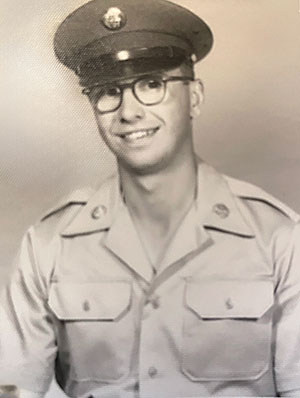
When Dan Werner felt the sensation of his left foot hitting the ground for the first time since 1969, it was “mind blowing.”
“It was just so exciting,” he said. “I never thought I’d feel that again.”
Thanks to the Advanced Platform Technology Center, a Department of Veterans Affairs rehabilitation research and development center in Cleveland, Werner and other veterans are experiencing things they’d long forgotten, often due to a traumatic event.
Werner was just 18 years old when he was drafted into the Army in 1968. After basic and advanced individual training, he got orders to go to Vietnam.
“Thirty days later, I was on a plane,” he said.
The following year, Werner and his unit were doing sweeps in Trảng Bàng in southeast Vietnam. Just as he approached a spot that others had already walked through, a land mine was remotely detonated.
Werner’s leg was amputated below the knee in Vietnam before he was sent to Japan and later to Walter Reed Army Medical Center in Washington, D.C., where he spent a year recovering. The devastation he saw at Walter Reed made him appreciate how much worse his injuries could have been, and he became determined to not let them hold him back.
“When I finally got a [prosthetic] limb that was fitting pretty good, and they were trying to tell me what I wouldn’t do or shouldn’t do … I kind of made up my mind that I was going to live life as the fullest that I could,” said Werner, who is a life member of DAV Chapter 116 in Parma, Ohio.
Werner went on to work in construction, had a long career with the United States Postal Service and even discovered water skiing.
“It didn’t hold me up, that’s for sure. It got to the point where I was kind of like a test person for new things,” he said.

About seven years ago, Werner was referred to the VA’s Advanced Platform Technology Center. The center, led by Executive Director Dr. Ronald Triolo, needed participants for a program focused on connecting prosthetic limbs to the nervous system to restore a sense of touch. Werner was “patient zero.”
Here’s how it works: They put sensors in the sole of Werner’s shoe, and pressure signals are transmitted to a stimulator implanted in the back of Werner’s thigh. That stimulator then activates the sensory nerves connected to the brain.
“We tickle the circuitry that used to carry that information, and he can perceive pressure as if it’s arising from his missing limb,” Triolo said.
Werner has tested out the neuroprosthesis on a balance machine, affectionately called the “shake and bake,” and walked blindfolded along a ladder laid flat on the ground. Triolo said the research shows that the sensors improve balance and confidence.
“Maybe they (program participants) don’t have to think as hard about what we take for granted as a simple act of walking, and they can have conversations while they’re walking, or they can get out in the community and walk in a crowd without being overly concerned about tripping and falling,” Triolo said.
Triolo also hopes to apply the technology to limb loss due to diabetes, which affects a large population of VA patients.
The neuroprosthesis program illustrates the center’s larger mission: to harness the most recent advances in technology and apply them to new innovations that can affect the health and daily function of disabled veterans. Other programs include innovations in home health monitoring and activity-based neurorehabilitation.
Jake Drost, DAV national service office supervisor in Cleveland, called the breadth and success of the center’s work “breathtaking.” Representing the DAV Department of Ohio, Drost sits on an executive committee that advises the center and helps ensure it pursues interventions that will be of most use to veterans.
Triolo said that input from Drost and other veterans service organizations on the committee has been “invaluable.”
Even more critical to the center’s research are selfless, service-minded veterans like Werner.
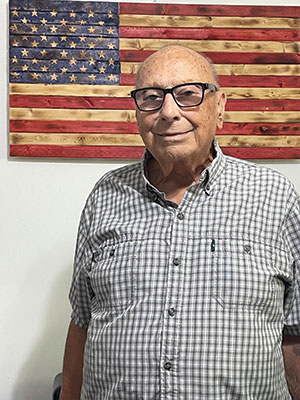 “I knew when I started I may not benefit from all this,” Werner said. “But somebody down the road is going to benefit from it, so that’s the reason I do it.”
“It sort of is the ethos of DAV,” Drost said. “And that’s veterans helping veterans.”
Triolo said the center and VA facilities across the country are always looking for volunteers to participate in research and development programs. He encourages veterans to contact their local VA and inquire.
“It’s not a commitment to the nation anymore. They’ve already done that,” Triolo said of the veteran volunteers. “It’s a commitment to … not only their fellow former service members, but they’re still making contributions to all Americans. Because this technology is going to help a lot of people, not just disabled veterans.”
Learn more about the Advanced Platform Technology Center at aptcenter.research.va.gov.
Related News & Events

Life membership rate rises to $350 in 2027
Veteran suicide prevention: Why connection matters

Dan Werner passed away on Oct. 4, 2024, at age 76, two months after sharing his story with DAV. We thank him for his lifelong service to others, and for his generous support of DAV and the veteran community. May he rest in peace.