

Meeting veterans where they are
Inside DAV’s gaming program, where volunteers meet veterans in a 100,000-member Discord server.
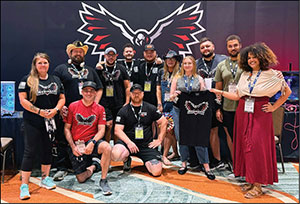
For over a century, DAV has found veterans through service offices, chapter halls and word of mouth passed from one generation to the next. Today, some of that same work is happening in a place that no one would likely have predicted a decade ago: online gaming communities where veterans gather to play, talk and connect.
Through its partnership with REGIMENT, DAV has a presence in a 100,000-member Discord community where veterans already spend their time. But the opportunity is bigger than any one platform: using gaming to build community, reach veterans who may not walk into a chapter hall and connect them with the same services DAV has provided for generations.
At the 2026 DAV and Auxiliary National Convention in Orlando, Florida, DAV members Bri Wheeler and Ricky Barker, along with REGIMENT Chief Community Officer Chris Henderson, talked about what that outreach looks like from the inside. Their stories show how a gaming community can become a doorway to DAV membership, volunteerism, friendship and the help veterans need.
The partnership: Bringing DAV’s mission into a digital community
Since its founding in 1920, DAV has fought for veterans benefits on Capitol Hill; helped veterans navigate claims; and connected veterans to transportation, education and employment resources. Gaming gives DAV another way to bring that mission to veterans where they already are. The organizations formally joined forces in October 2025, creating an opportunity for DAV to engage a growing online veteran community while continuing to build its own gaming and livestreaming presence.
The goal is straightforward: Make sure no veteran is left behind in the digital age. Gaming can reduce isolation, create friendships and give veterans a place to connect, while DAV can provide a path to the free services it has always offered. Younger veterans and separating service members may be less likely to walk into the chapter halls that their grandparents did, but many are already logging on to game, talk and build community.
Gaming: Where veterans already are
A large gaming Discord server can function like any other online community, with channels for hanging out, organizing matches and sharing games. For DAV, it also creates an opportunity to bring its mission into those conversations. DAV members volunteer their time to answer veterans’ questions, share information about Department of Veterans Affairs benefits and help point veterans toward the resources they need—all on a platform where they are already comfortable asking for help.
The distance between “I have a question about my disability rating” and “someone from DAV can help” can be as short as a typed message. For veterans who have grown up online, that accessibility can make it easier to ask a question, learn about a benefit or take the first step toward filing a claim.
 Chris Henderson: Discovering what DAV has to offer
Henderson (known online as Mango) wasn’t always familiar with DAV, and he’s candid about the assumptions some younger veterans have about traditional veterans organizations.
“It actually happened because of the partnership with REGIMENT,” Henderson said of joining DAV. “Up until that point, honestly, I kind of believed the stigma that American Legion, DAV and VFW were just for a bunch of older guys drinking in a club somewhere. It wasn’t until REGIMENT partnered with [DAV] that I actually said, ‘Oh, they can help me with a lot.’”
That shift in perception is one of the opportunities created by meeting veterans in gaming communities: showing veterans who may not see themselves in traditional outreach that DAV is ready to help. Attending his first DAV national convention this year, Henderson said he expected it to be filled with a certain generation of warriors but found something entirely different.
“I honestly thought it would be an older crowd, but I see a lot of younger veterans coming in here and getting help,” he said. “The fact that [DAV] has people here ready to help with claims is amazing. We have one of our guys who waited six years to do his claims. Yesterday, he got in, and an hour later he was doing his C&P exam. I think that’s amazing.”
Six years to one hour is the kind of gap DAV’s digital outreach can help close. Henderson’s advice to veterans currently transitioning out of the military reflects the same theme. The problem was never a lack of benefits but a lack of knowledge about how to access them.
“When you get out of the military, you severely lack knowledge about what is available to you, whether it’s benefits, claims, education or housing,” Henderson said. “Nobody really teaches you any of that. My biggest piece of advice is to connect with someone from DAV who can help you navigate, whether it’s your claims, buying a home, getting a job or going to school. DAV has someone for everything.”
 Bri Wheeler: Paying it forward through service
Wheeler, a DAV member and volunteer from Florida, came to DAV the way many of its advocates do—as someone who was helped first.
“I joined DAV because when I first went through the claims process, the gentleman who helped me was a chapter service officer here in Florida,” Wheeler said. “I felt like my way to pay that back was A) to become a member of DAV and B) to start doing [volunteer] work.”
A little over two years into her membership, Wheeler is now on the other side of that same process, volunteering her time to help other veterans navigate programs and pointing to a particular vulnerability in the system that DAV exists to catch.
Wheeler believes the most important part of DAV’s mission is “the work that we do for veterans and the way we’re able to advocate for them through claims assistance,” she said.
Wheeler is also direct about where DAV’s outreach lands hardest, not just with veterans who have already separated but with service members who are actively transitioning to civilian life. Her advice is to connect with DAV as early as possible, including through a transition service officer on base or by using the DAV office locator on dav.org to find a local DAV national service office, which can help set up a Benefits Delivery at Discharge claim before separation is even final.
For Wheeler, the value of gathering with other DAV members—whether at a national convention, in a chapter or inside an online gaming community—is that it gives veterans opportunities to connect beyond their individual states and chapters.
“Modern problems require modern solutions,” Wheeler said. “The more collaborative effort we can have, whether through conventions like these or by connecting online with REGIMENT, the more of a difference we can make.”
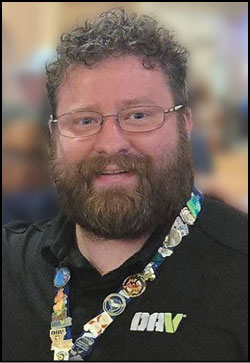 Ricky Barker: From crisis to purpose
An Army veteran and colon cancer survivor, Barker was medically retired from the Army in 2015 after a battle with bacterial meningitis. But he said his breaking point came when he was in the depths of a mental health crisis, having received a notice of nonrenewal on his home. When he created a social media post asking for help, a DAV member reached out.
“The best way I can explain it is that it’s not that I feel indebted to DAV,” Barker said. “It’s that, after they helped me, I didn’t want anybody else to ever go through what I went through.”
Barker had never heard of DAV before the organization found him. Today, less than two years after becoming a member, he is first junior vice commander of DAV Chapter 25 in Cleveland, Tennessee, and has logged more than 500 volunteer hours along the way.
“DAV gave me a purpose,” Barker said. “At this point, I just want to do everything I can to help other veterans, because it’s therapeutic.”
That sense of purpose runs directly against a message Barker said he heard repeatedly after leaving the service, as he searched for work outside the manual labor jobs he’d always known, that a service-connected injury made him a liability, not an asset. Hearing it enough times, he said, he started to believe it. DAV is what convinced him otherwise.
“DAV made me realize that I’m not broken,” he said. “I can still help people.”
Barker’s advice to transitioning service members lands with the weight of someone who has been on the other side of it. Family in the room doesn’t guarantee you won’t feel completely alone, and DAV’s community includes people who have occupied that same headspace and can help find a way forward.
“They can help you find the light at the end of the tunnel,” he said. “You might not be the way you were before, but it’s something. Going from having no purpose to having a purpose again is great.”
What this means for DAV’s future
Henderson’s, Wheeler’s and Barker’s stories show what can happen when DAV meets veterans in the communities where they already spend time. A veteran who assumed DAV wasn’t for him became a member after discovering what the organization could offer. A veteran who once received help now spends her time volunteering to help others. And a veteran who felt listless found a reason to keep going—and then a way to give back.
That is the real promise of DAV’s gaming and livestreaming program, not simply placing information in a new digital space but building community and creating more ways for veterans to find one another, find purpose and find DAV. Gaming provides the entry point. The larger goal is connection—to the benefits and services DAV provides, to other veterans, and to a community built around service.
For an organization built on the idea of keeping a promise to America’s veterans, meeting them inside a gaming lobby instead of waiting for them to find a chapter hall is another way DAV can make that promise real. As its gaming community grows, so does the opportunity to turn online connections into lasting relationships, volunteerism and service.
For more information on DAV’s gaming and livestreaming programs, go to the DAV Gaming page at dav.org/gaming or contact us at [email protected].

Related Content
‘The most fun ever’
They came to learn an art. They found confidence, connection and a community.

Pursuing the highest degree of caregiving for his veteran mother
A devoted son recalls the challenges and joys of caring for his veteran mother through her incurable illness.
Finally seen
After years of health problems and frustration with his VA claim, Navy veteran Daniel Kerr had nearly given up. Then, he found hope.
