How adaptive golf is changing what veterans believe is possible
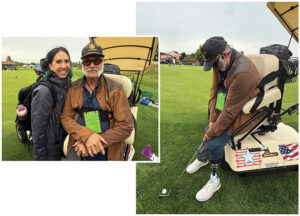
The first time Thomas Severns picked up a golf club was on a chilly and rainy Monday morning in Riverside, Iowa.
Neither the weather nor his inexperience stopped the Army veteran from almost immediately sinking long putts on the practice green during the 2026 National Disabled Veterans Golf Clinic.
“I was born with that gift that all sports come easy,” Severns said, laughing.
He said he’s always lived an active lifestyle full of sports and outdoor activities. Golf is his latest endeavor. His son plays, and Severns’ goal is to play with him.
But getting on the course has been a significant challenge. Severns, a left-leg above-the-knee amputee, said he also sustained multiple traumatic brain injuries, underwent brain surgery, broke his back and has limited mobility in his hips. By attending the golf clinic, he learned how adaptive equipment can make participation easier and more sustainable.
Joining him for the weeklong clinic was Jacqueline Cismowski, his recreation therapist from the Mann-Grandstaff VA Medical Center in Spokane, Washington.
Cismowski volunteered to come as his golf buddy to help him navigate the course, tee up the ball and work through adaptations. She said she also came to expand the services she can provide to other veterans. While she’s helped veterans with blindness and low vision play golf, adapting the sport for veterans with mobility restrictions is a newer experience for her.
To accommodate his mobility limitations, Severns uses a device Cismowski hadn’t worked with before—an adaptive golf cart called a SoloRider, which secures him in place and can lift and support him in a standing position.
For any veteran Cismowski works with, she said the evaluation process is the same: find out what activities are important to them; determine what they’re able to do on their own; then find comfortable, safe adaptations that increase their independence in what they want to do.
“Because if it’s not comfortable, then they’re not going to continue to engage,” she said.
Severns, who shows a bit of a rebellious spirit, pushed back a little.
“We’d find a way to do it whether we had the equipment or not,” he said. But he conceded that adaptations have helped. The equipment has allowed his disabilities to become less central to the experience.
“It makes it easier to do without as much pain,” Severns said. “You can last longer.”
Severns was one of more than 220 veterans who came to the clinic, which is co-presented annually by DAV and the Department of Veterans Affairs. More than 400 volunteers supported the event as medical staff, instructors, golf buddies, therapists, transportation drivers and course coordinators.
To accommodate all the participants, the clinic was spread across four local courses. At each location, veterans received professional instruction adapted to their individual limitations.
They also had the opportunity to participate in alternative activities including disc golf, audio rifles, kayaking and virtual reality golf.
Through DAV Caregivers Support, caregivers who also traveled to Iowa with their veterans were offered dedicated training and activities throughout the week. This included seminars and a visit to a local equine therapy facility.
“This is an incredible event,” DAV National Commander John Donovan said. “The impact is that it’s making the veterans feel that they aren’t disabled; they’re better abled. It’s helping them refresh their life.”
More than half the veterans were first-time participants.
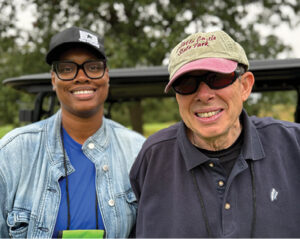
Army veteran Mark Minopoli was reluctant to attend at first. He used to play golf regularly and said it was one of the few things that gave him serenity and calmness. But he stopped because of his disabilities.
In his mind, he kept telling himself he couldn’t do it. “I was going to sell my clubs,” he said.
But his wife persuaded him to sign up for the clinic, and after some instruction and work with his golf buddy, Andra Smith, he started finding success.
“Wow, I can actually hit this thing!” he said.
Smith, who works as a VA recreation therapist, said what helped Minopoli most was receiving encouragement.
“I think that’s the biggest thing: holding on to the positive aspect of it because it’s easy to be discouraged,” she said. “We’re going to hang in there. We’re going to push through it.”
“Oh yes!” Minopoli said.
The experience had him reconsidering other adaptive sports opportunities he’d previously written off. His wife had also mentioned to him the National Disabled Veterans Winter Sports Clinic, another clinic co-presented by DAV and the VA.
“OK. Maybe I’ll go,” he said.
As the golf clinic creates an environment for veterans to realize new possibilities, it’s doing the same for some of the volunteers, too. For the past two years, several recreation therapy students at the University of Iowa have observed and helped at the clinic.
Their inclusive recreation course instructor, Gayle Dombroski, said it’s provided a different perspective on recreation therapy they otherwise may not have gotten because they don’t often work with the veteran population.
She said, in her experience, disabled veterans were typically more active before their illness or injury than other patient populations, so they’re often eager to find ways to reengage in activities they once enjoyed. Her students heard multiple times throughout the week how much recreation therapy has changed a veteran’s life—something they don’t often hear in other environments.
“For us to hear—especially for the students to hear—that we can have such an impact and provide these opportunities that might not be readily available is certainly very cool,” Dombroski said.
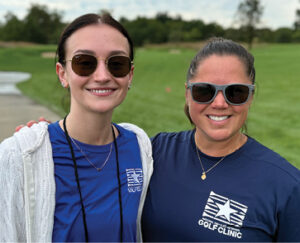
Brooklyn Haller, one of Dombroski’s students, said one of her biggest takeaways was better understanding how recreation therapy can help someone regain independence. “We as professionals can create these opportunities,” she said.
For Cismowski, seeing what veterans do with those opportunities is one of the most rewarding parts of the work.
“Sometimes it brings a tear,” Cismowski said, “because you see their progression and their increase in independence and their perspective of ‘yes, I can do this.’”
She has seen that progression in Severns. Golf is simply his latest pursuit in his determination to remain active.
“It’s all about what I want to do, and I dang sure don’t want to sit in a chair,” Severns said.
2026 Freedom Award Winner – Justin Hall
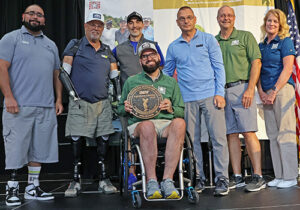
After Army veteran Justin Hall woke up from a two-week coma, he couldn’t move.
He was paralyzed by a service-connected rare autoimmune disease that attacked the support cells in his brain and spinal cord. At first, he thought the diagnosis was a death sentence and that he wouldn’t live past five years.
But when he was introduced to adaptive sports, his mindset shifted.
“I think adaptive sports isn’t what changes your life; it changes your perspective,” Hall said. “And you can apply being able to do hard things to daily life.”
The 2026 National Disabled Veterans Golf Clinic was Hall’s second golf clinic.
“When I get out on the golf course, I feel free,” he said.
He also enjoys the camaraderie of the clinic, which puts veterans into groups of four on the course. Hall said he draws inspiration from watching other veterans navigate through their own limitations.
“You’re each going through a different challenge and overcoming it, and you’re cheering each other on,” he said.
Back home in Augusta, Georgia, Hall encourages other veterans to get involved in adaptive sports. He regularly participates in a weekly adaptive pickleball group and plays at a local golf course called The Patch.
“Doing adaptive sports has gotten me off the couch and back into society,” he said.
Hall received the 2026 DAV Freedom Award at the golf clinic’s closing ceremony for being the participant who most embodies the spirit of the clinic.
You can learn more about Justin Hall’s story at veteransgolfclinic.org.

Related Content