
Just a few days after her 50th birthday, Army veteran Lucy Del Gaudio woke up in a full sweat—the start of a serious health struggle that took her by surprise.
“Welcome to the menopause club,” her friend told her the next day.
Soon after entering a club she wanted no part of, Del Gaudio experienced bloating, weight gain and dizziness. A marathon runner, she stopped training after a dizzy spell knocked her off her feet, resulting in a broken shoulder. On top of that, she was hit hard by depression.
“The low was really low,” Del Gaudio said.
Usually beginning in women’s mid-40s, the transition into and throughout menopause brings fluctuations in hormone production and is often accompanied by physical symptoms, including hot flashes and night sweats; sleep disruption; body aches; weight gain; incontinence; memory problems; and changes in bone, heart and sexual health.
This period has been shown to double the risk of depression and corresponds to the highest rates of suicide among U.S. women. For women who served in uniform, the experience of menopause can be even more challenging when factoring in post-traumatic stress disorder (PTSD).
Of the roughly 600,000 women who use Department of Veterans Affairs health care, nearly half are between 45 and 64 years old, spanning the typical life cycle of menopause. Even for younger veterans, there are indications that some may be at higher risk for early menopause.
Yet a recent DAV report showed that the impact of menopause on veterans is undefined and understudied, particularly when it comes to mental health and suicide risk. And while the VA has invested significantly in women’s health, including menopause, a recent review suggests room for improvement.
“Given the growing population of women who served and the age range of women using the VA, it is critical that we ensure the VA and Congress are appropriately investing in menopause-related research, education, outreach and care,” said DAV National Legislative Director Joy Ilem.
“The stakes are high, and our women veterans—many of whom sacrificed their health in service to the nation—deserve nothing less.”
‘EXACERBATE SYMPTOMS’
Del Gaudio’s menopause symptoms may have been heightened due to the military sexual trauma (MST) she said she survived while on active duty. According to the VA, 1 in 3 women report having experienced MST.
That trauma can have far-reaching effects, including in menopause. One study of midlife women enrolled in VA health care in California showed that exposure to MST was associated with “clinically significant menopause and mental health symptoms.”
“Women veterans having a higher prevalence of mental health conditions, as well as having experiences including trauma and environmental exposures, that can all sort of exacerbate symptoms that are associated with menopause,” said Dr. Sally Haskell, deputy chief officer for the VA Office of Women’s Health.
When Shannon Sander was thrown into early menopause at 26 as part of treatment for endometriosis, a potentially painful and debilitating condition affecting the uterus, she started “sweating through sheets two to three times a night” and was always on edge. She also had to reckon with not being able to give birth to children as planned.
“I was 100% a bomb waiting to explode every day,” she said. “It was miserable.”
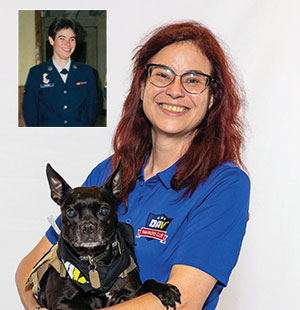
Sander served in the Air Force during the Gulf War in areas with known toxic exposures. She also has PTSD related to MST. Both experiences may have worsened her menopause symptoms, and she’s not alone in being a Gulf War veteran who experienced early menopause.
According to a VA study of nearly 700 Gulf War-era women, those with PTSD had a nearly 2½ times higher risk of early menopause while those with toxic exposures had 83% higher odds.
Haskell said the research on early menopause among women veterans is one of the areas where “a lot more work has to be done to understand” the implications.
Now, at age 52, Sander said she has a 10% higher risk of fracturing a bone due to menopause-related osteoporosis. She’s also one of countless veterans living with chronic pain, something research shows may also be exacerbated by menopause.
‘THE HAPPY MIDDLE’
Hormone replacement therapy, or HRT, has become an increasingly popular treatment option in which hormones like estrogen and progesterone are administered to replace or supplement hormones that the body has stopped producing in sufficient quantities.
Initially hesitant, Del Gaudio took estrogen for her menopause symptoms after working closely with a VA gynecologist. Within 30 days, her symptoms had lessened.
“I feel like my life is much, much better,” she said.
Dr. Susan Diem, staff physician at the Minneapolis VA women’s clinic, has witnessed the pendulum swing on HRT use—from providers giving everyone HRT to backing off after research indicated an increased risk for breast cancer and cardiovascular events. Those risks were later found to be particular to women in their 60s. Diem said providers can now feel comfortable prescribing HRT to younger women, depending on their unique health histories.
“There still is uncertainty about long-term use, and so it’s still the case that the goal is to limit its use,” Diem said. “I think the trick is for us not to swing too far back again and to find the happy middle.”
In addition to HRT, Haskell said the VA takes a whole-health, multidisciplinary approach to menopause that includes mental health and interdisciplinary therapies like yoga, along with specialists for things like gynecology, cardiology and musculoskeletal health.
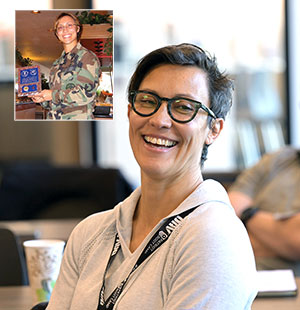
Air Force veteran Maria Luque has studied menopause for roughly 15 years. As a fitness coach with a doctorate in health sciences, she’s a strong proponent of using movement to navigate menopause and improve overall health.
“When we’re looking at the quality-of-life loss that a lot of women experience during menopause for different symptoms, adding physical activity or changing how you exercise or move can be very positive on how you experience menopause and even influence some symptoms,” Luque said.
But Luque warned there’s no one-size-fits-all magic pill for menopause—an important reminder at a time when menopause is dominating mainstream conversations and people are profiting off “snake oil” solutions.
“If it’s too good to be true, or someone preys on your fear or your pain points, they are generally not to be trusted,” Luque said.
‘CLOSE THE GAPS’
In June, the VA released findings from a review of menopause support needs. Diem, the lead author, said the review found a need for more primary care provider training, more availability of menopause-informed specialists and more patient education. Haskell said all women’s health primary care providers are trained on menopause, but there’s a need to ensure the entire primary care workforce is sufficiently trained.
Haskell also confirmed that the VA and Department of Defense are working on clinical practice guidelines for menopause care, and the Government Accountability Office is working on an extensive review of menopause care at the VA.
The June review also found an interest in menopause support groups, the kind of thing Luque said can be crucial in life transitions.
“Women are realizing that they’re not alone in this space,” Luque said. “And knowing that is truly magical when women realize that there’s a community.”
It’s one reason she became a head menopause coach at Respin, a company founded by Academy Award-winning actor Halle Berry. The website, re-spin.com, offers science-backed, expert health coaching and a community of support, and Berry regularly advocates for legislation filling some of the resource gaps, including for women veterans.
“Our American veterans have served and sacrificed so much for this country, and of the many challenges they face upon reentering civilian life, accessing health care shouldn’t be one of them,” Berry told DAV.
“At Respin, we are fighting not only to create innovative health care solutions to meet the needs of women in midlife but are also advocating for policy change to close the gaps in research and care access—bills like the Servicewomen and Veterans Menopause Research Act and the Advancing Menopause Care and Mid-Life Women’s Health Act are essential!”
As women’s health care continues to evolve at the VA, one hurdle will be making sure women know what care is available to them and rebuilding trust with those who have had negative experiences, like Sander.
Sander ultimately left the VA for a few years and sought women’s health care elsewhere. She said that left gaps in her medical record, making it difficult to seek service connection for certain conditions.
When Luque and Del Gaudio had negative experiences, they reported it up the chain. Today, they’re both satisfied with their women’s health care at the VA.
“I want to just encourage everyone to give the VA another try and to demand that they’re being seen and treated for whatever their symptoms are,” Luque said. “Because each woman who [comes back] makes a difference … [and] that correlates to more resources.”

Related News & Events

DAV statement on the halting of VA rule

Gamers: Stream for DAV on Twitch